
The Greatest Escape in Irish History: Voices from the Tomb
Special Guests include:
Sinn Féin TD Mairead Farrell, who represents Galway West and South Mayo and serves as spokesperson on Public Expenditure, Infrastructure, Public Service Reform, and Digitalization.
Marcus Howard, an independent historian and filmmaker, who will speak about “The Greatest Escape in Irish History: Voices From the Tomb” as part of the 150th anniversary reflections.

Catalpa Presentation by David Duggan of New Bedford
Lecture Date: May 2, 2025
The music group Failte presented some appropriate songs prior to the presentation. "There is a Plot afoot! People just don’t speak that way any more, but it sums up perfectly the moment when the Catalpa, a 200 ton Whaling Ship left New Bedford, Ma on April 29th 1875. Only Captain George Anthony and Irishman Deni
Lecture Date: May 2, 2025
The music group Failte presented some appropriate songs prior to the presentation. "There is a Plot afoot! People just don’t speak that way any more, but it sums up perfectly the moment when the Catalpa, a 200 ton Whaling Ship left New Bedford, Ma on April 29th 1875. Only Captain George Anthony and Irishman Denis Duggan knew it’s real mission, to rescue 6 Irish political prisoners “Fenians” held in Freemantle Gaol in Western Australia. This improbable mission would be daunting by today’s standards, but 150 years ago, no motorized vessels, no Loran, no GPS, no Satellite communications…Just a plot!
A Brief Compilation of the Major Points of the Catalpa Rescue Story by Paul T. Meagher
A Brief Compilation of the Major Points of the Catalpa Rescue Story by Paul T. Meagher
Publish Date: September 2010

Catalpa Fenian Escape Commemoration 2016 in Rockingham
140th Anniversary Annual Easter Monday Catalpa Commemoration
Rockingham, Western Australia Monday 28th March 2016
Rockingham is the site of the escape of six Irish political ‘Fenian’ convicts on Easter Monday 17 April, 1876.

The Voyage of the Catalpa – Peter F. Stevens
Lecture Date: November 14, 2013
This lecture explores the daring 1876 journey of the ship Catalpa, focusing on the perilous voyage to Western Australia and the successful escape of six Irish Fenian prisoners. Peter F. Stevens recounts the daring plan, the challenges faced at sea, and the significance of this historic rescue, highlighting its importance in Irish and maritime history.

Prison Life In Fremantle, Australia | Tony Robinson
Prison Life In Fremantle, Australia | Tony Robinson
Comedian and Historian Tony Robinson visits Fremantle, known historically as a place of punishment. Tony explores the history of the Round House, the oldest surviving building of Western Australia, and Fremantle Prison, which was home to a "prank call" escape.

Captain Anthony's Catalpa Logbook: Record of the 1876 Fenian Rescue Mission
Captain Anthony's Catalpa Logbook: Record of the 1876 Fenian Rescue Mission is a detailed account of the daring operation to rescue Irish Fenians from Western Australia. This logbook offers firsthand insights into the ship's journey, the planning and challenges of the rescue, and Captain Anthony's leadership. It provides a unique look int
Captain Anthony's Catalpa Logbook: Record of the 1876 Fenian Rescue Mission is a detailed account of the daring operation to rescue Irish Fenians from Western Australia. This logbook offers firsthand insights into the ship's journey, the planning and challenges of the rescue, and Captain Anthony's leadership. It provides a unique look into one of the most adventurous and significant events in maritime and Irish history.
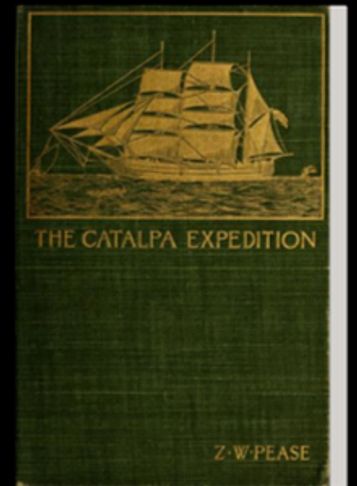
"The Catalpa Rescue" by Z.W. Pease
"The Catalpa Rescue" by Z.W. Pease was written in 1934. It provides a detailed account of the daring 1876 mission to free Irish Fenian prisoners from Western Australia, highlighting the bravery and strategic planning involved in this historic rescue.
Bark Catalpa Lithograph
Bark Catalpa Lithograph
Artwork titled "Bark Catalpa, of New Bedford," created by artist E. N. Russell and printed by Forbes Lithograph Manufacturing Company in 1876. It features the famous ship Catalpa from New Bedford.
"The Voyage of the Catalpa" by Peter F. Stevens
"The Voyage of the Catalpa" by Peter F. Stevens is a detailed account of the historic 1876 rescue mission, where the ship Catalpa sailed from New Bedford to Western Australia to free Irish Fenian prisoners. The book explores the planning, daring escape, and the significance of the event in both Irish and maritime history. It was written in 2003.
Catalpa Sightings and Encounters
The Circumpolar Navigator Arctic Heritage Library's list of Subject: Catalpa (Bark)—Sightings and Encounters includes documented observations and reports related to the ship Catalpa. This collection covers various sightings, encounters, and historical references involving the Catalpa, highlighting its significance in maritime history and its role in notable events like the 1876 Fenian rescue.
Journal of the Catalpa and James Loper Whaling Voyages (1856–1860)
Journal of the Catalpa and James Loper Whaling Voyages (1856–1860)
This journal records the whaling voyages of the bark Catalpa and the ship James Loper between 1856 and 1860. Mastered by William F. Snow and Obed Ramsdell, and kept by Benjamin A. Coffin, it details two main journeys: the Catalpa from New Bedford (June 1856–September 1857) and the James Loper from Nantucket (October 1857–January 1860). Th
This journal records the whaling voyages of the bark Catalpa and the ship James Loper between 1856 and 1860. Mastered by William F. Snow and Obed Ramsdell, and kept by Benjamin A. Coffin, it details two main journeys: the Catalpa from New Bedford (June 1856–September 1857) and the James Loper from Nantucket (October 1857–January 1860). The journal also includes poetry at its conclusion, offering personal reflections from the crew.

Freemantle Prison Official Site
Fremantle Prison, located in Western Australia, was built in the 1850s as a convict prison and operated until 1991. It is a historic site known for its colonial architecture and role in Australia's justice system. The prison became famously connected to the Catalpa rescue in 1876, when Irish Fenian prisoners held there were daringly rescu
Fremantle Prison, located in Western Australia, was built in the 1850s as a convict prison and operated until 1991. It is a historic site known for its colonial architecture and role in Australia's justice system. The prison became famously connected to the Catalpa rescue in 1876, when Irish Fenian prisoners held there were daringly rescued by American and Irish supporters in a bold maritime operation. The event is a significant chapter in both Australian and Irish history, symbolizing resistance and solidarity.

The Catalpa Rescue: the Daring Escape of Irish Rebels from Australia
April 2025
Reading time: 13 minutes
When a plan to overthrow English rule in Ireland was foiled in the 1860s, hundreds of Fenian rebels were arrested and convicted. A handful of those were condemned to transportation to Australia with no hope of pardon or of ever seeing their families again.
By Morgan W. R. Dunn
Moved by their plight, a rad
April 2025
Reading time: 13 minutes
When a plan to overthrow English rule in Ireland was foiled in the 1860s, hundreds of Fenian rebels were arrested and convicted. A handful of those were condemned to transportation to Australia with no hope of pardon or of ever seeing their families again.
By Morgan W. R. Dunn
Moved by their plight, a radical Irish journalist championed a daring plan to send a ship, the Catalpa, around the world to spirit the convicts to safety.

The Catalpa Rescue - RTE
The Catalpa Rescue - RTE
This documentary film tells the story of one of the greatest prison escapes in history. A celebrated story in its day, this 150-year-old story has long since been forgotten. Set amid the background of a period of great change in world history – the last days of Colonial Britain – the remnants of their time resonate today in the British policy towards Northern Ireland.

O'Reilly and the Whaling Ship Gazelle
Before becoming a prominent writer and reformer, O'Reilly spent time at sea, and he was a crew member of the whaling ship Gazelle.
The ship Gazelle was a whaling vessel that played a role in O'Reilly's maritime experiences. His time aboard the Gazelle exposed him to life at sea, adventures, and the hardships of sailors, which later influenced his poetry and writings.

New Bedford VIP3 Walking Tour - Notable People in New Bedford History
New Bedford VIP3 Walking Tour - Notable People in New Bedford History
Join the incomparable Bruce Barnes on his VIP 3 Walking Tour in west end New Bedford. The VIP 3 tour visits seven family houses where we learn about the families associated with these houses, and their significance and impacts to the history of New Bedford.

History of New Bedford
Under the Editorial Direction of ZEPHANIAH W. IJEASE
Editor of The Morning Mercury
Published in 1918
Forgotten Goleen Fenian Michael Harrington Rescued by Whaler Catalpa from Fremantle, Australia 1876. Later Lived in New Bedford, Massachusetts.
Published on Dec 6, 2013
Jim Hurley, M.A., Clonakilty, Bursar, Registrar, UCC (1902-1965).
1420 WBSM Interview March 2025
1420 WBSM Interview March 2025
Lucy Bly and Jim Ryan (descendent of Captain Anthony) discuss the story of the Catalpa, a New Bedford-based whaling ship that carried out a dramatic rescue of six Irish prisoners being held in Western Australia in 1876.

Fenian Memorial Committee of America
They are dedicated to reviving and honoring the memories of Irish men and women who fought for Ireland, sought refuge in the United States, and made their final stand on American soil. These individuals are part of a long-standing tradition of resistance against English rule in Ireland, and Irish America is deeply connected to their effor
They are dedicated to reviving and honoring the memories of Irish men and women who fought for Ireland, sought refuge in the United States, and made their final stand on American soil. These individuals are part of a long-standing tradition of resistance against English rule in Ireland, and Irish America is deeply connected to their efforts and sacrifices. Remembering and memorializing them is considered a vital duty, as it allows for the honoring of heritage and a better understanding of Ireland’s ongoing journey toward reunification and independence.

Fenian Graves
The Fenian Graves Association has been established for the purpose of keeping the memory of our Irish American Fenian heroes and heroines alive by recording their deeds on behalf of Irish freedom as well as their many sacrifices for their adopted homeland, America.
Whaling Crew List Database
Whaling Crew List Database
In March 2018, the New Bedford Whaling Museum and Mystic Seaport launched WhalingHistory.org, which includes this crew list database and six others, three related to American offshore whaling. The database was first created by the New Bedford Free Public Library, using records from the port’s chaplains detailing men leaving from 1840 to 1
In March 2018, the New Bedford Whaling Museum and Mystic Seaport launched WhalingHistory.org, which includes this crew list database and six others, three related to American offshore whaling. The database was first created by the New Bedford Free Public Library, using records from the port’s chaplains detailing men leaving from 1840 to 1927. Staff and volunteers, led by Curator Judith Lund, have since expanded the database to include crew lists from Fall River, Salem, and New London, covering 1809 to 1927.

www.whalingcity.net
Whaling City.net is a website about the history of New Bedford, Ma. from it's first European visitors to current times. WhalingCity.net offers a vast wealth of photographs, videos and images as well as a chronological timeline of dates and events.

Historic New Bedford Grove Hawthorn and Cottage Streets Walking Tour
The Grinnell Mansion is mentioned in the beginning of this video.
Join Bruce Barnes on this New Beford Preservation Society walking tour as we view historic houses on Grove, Hawthorn, and adjacent streets. Many of these are seldomly seen and represent a fascinating slice of New Bedford history and architecture .
New Bedford Rural Cemetery Historic Walking Tour
New Bedford Rural Cemetery Historic Walking Tour
Captain Anthony is buried in this cemetery.
New Bedford’s Rural Cemetery was opened in 1837. It was developed in the style of a “rural or garden cemetery” style that became popular in the mid-1800s.

New Bedford Historic District Tour - Where the Whaling City Began (Whaling National Historical Park)
Join us on this wonderful walking tour with Bruce Barnes that illustrates the heart of New Bedford’s historic district - the area that encompasses the Whaling National Historical Park. Learn about this fascinating area and visit many of the historic sites that comprise the New Bedford Whaling National Historical Park and the New Bedford
Join us on this wonderful walking tour with Bruce Barnes that illustrates the heart of New Bedford’s historic district - the area that encompasses the Whaling National Historical Park. Learn about this fascinating area and visit many of the historic sites that comprise the New Bedford Whaling National Historical Park and the New Bedford Historic District. This area was the heart of old New Bedford from its founding, to its emergence as a major commercial center.
Historic New Bedford Grove Hawthorn and Cottage Streets Walking Tour
The Grinnell Mansion is mentioned in the beginning of this video.
Join Bruce Barnes on this New Beford Preservation Society walking tour as we view historic houses on Grove, Hawthorn, and adjacent streets. Many of these are seldomly seen and represent a fascinating slice of New Bedford history and architecture .
New Bedford Rural Cemetery Historic Walking Tour
New Bedford Rural Cemetery Historic Walking Tour
Captain Anthony is buried in this cemetery.
New Bedford’s Rural Cemetery was opened in 1837. It was developed in the style of a “rural or garden cemetery” style that became popular in the mid-1800s.